
From Translation to Full Localization - The Com4 Case Study
Project: Editing and localization of the Com4 website
Scope: Language audit, UX writing, SEO editing, copy editing, proofreading
Goal: Adapting communication to the Polish market and user context
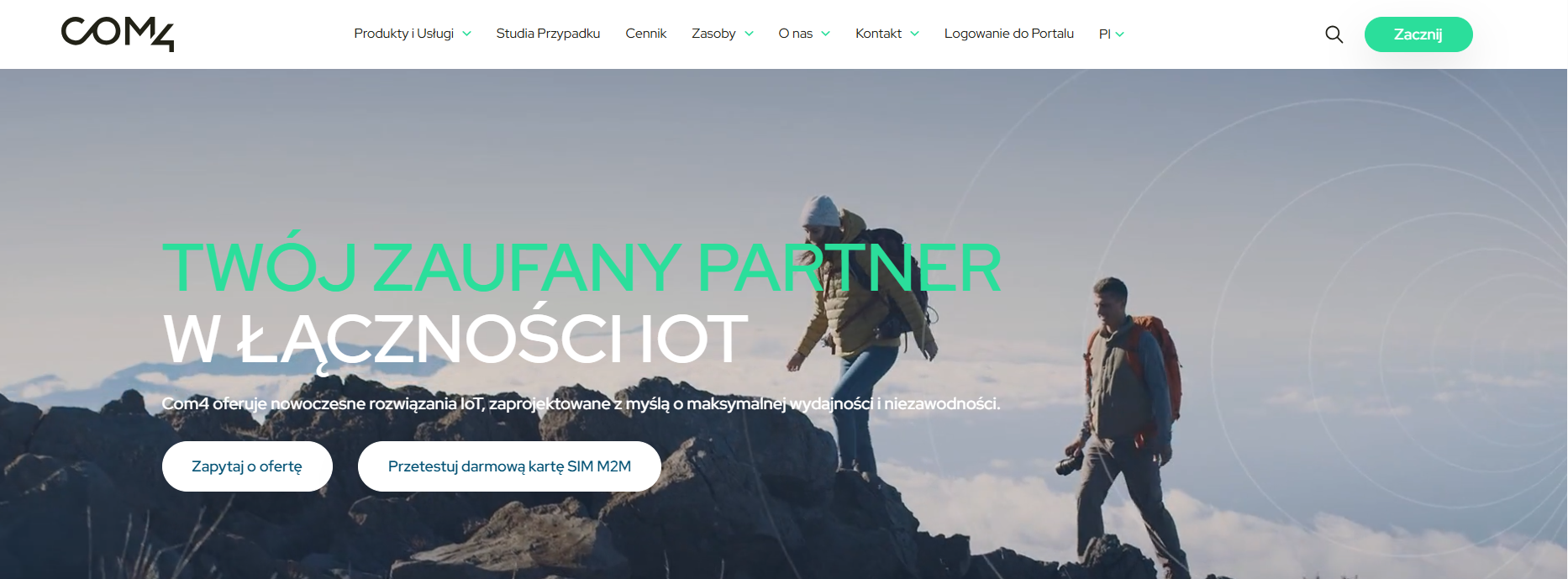
My favorite projects are the ones that challenge me - the kind that demand focus, depth, and high standards. Working with Com4, a Norwegian provider of IoT connectivity and satellite solutions (including Starlink), was exactly that kind of project. Like a double shot of espresso - intense, complex, and deeply satisfying from start to finish.
Com4 is a team of professionals who understood from the very beginning that translation alone wouldn’t cut it. Expanding into the Polish market takes more than accurate wording - it requires localization, language that fits how real people in Poland read, think, and make decisions.
From Translation to Localization
The mission was ambitious from day one. My job was to review and re-edit 23 pages packed with technical information and make sure the content was not only correct but also UX-friendly and marketing-oriented.
Here’s what I discovered after the first read-through:
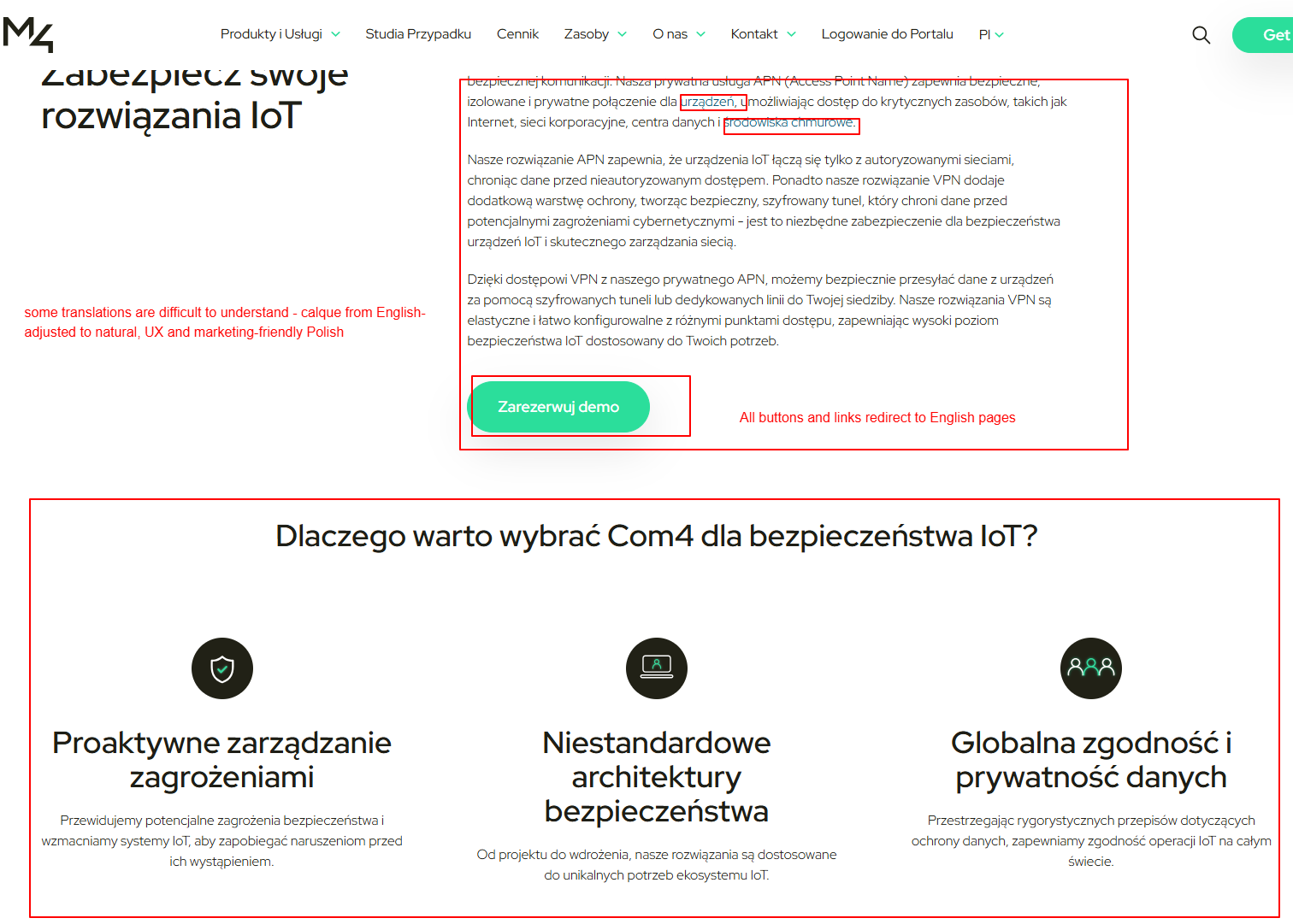
Many sections were literal, word-for-word copies from English.
There were grammar mistakes, typos, and stylistic inconsistencies.
The tone felt heavy, overly formal, and hard to read.
Sentences were technically correct but awkward in Polish.
Long paragraphs and complex sentence structures disrupted the reading rhythm.
Calls to action were inconsistent, unclear, or lacked energy.
It wasn’t really a language issue - it was a context issue. The content simply wasn’t adapted to how Polish users process information. Almost every page needed more than proofreading; it needed full editorial work.

The Process
The best (and sometimes worst) thing about localization is that you can’t translate everything literally. In Com4’s Polish version, I often came across words that were correct in theory but didn’t hit the mark in real use.
Classic example:
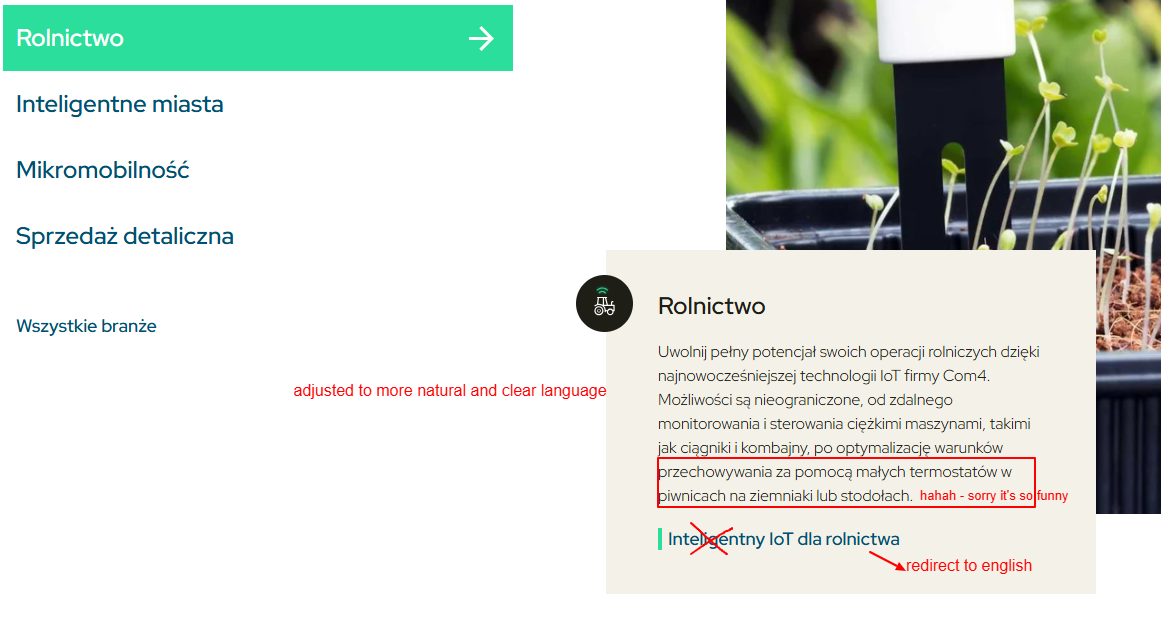
“Smart devices” translated as “inteligentne urządzenia.”
Technically accurate, but in Polish, “intelligent” is used for people, not routers.
So yes, a router can be “smart,” but not “intelligent” in the academic sense.
That’s where localization becomes linguistic detective work. I ran a quick industry check - how local tech brands actually talk about their products, which terms sound natural, and which sound like an ad for a 2008 washing machine.
The goal wasn’t just to “fix mistakes.” It was to make the content sound like Com4 speaking Polish, not a translated copy of their English website.
Step by Step
1. Content and structure analysis
I navigated the site like a real user: what catches my eye first, what draws me in, where do I stop? Many sections had solid substance but lacked rhythm and clear hierarchy.
2. Simplifying the language
I shortened sentences, replaced passive voice, and streamlined the syntax. Polish is dense and inflected - it needs clean rhythm and flow to stay readable.
3. UX writing adjustments
I rewrote headlines and CTAs to guide users, not just sound polished:
“Learn more” = “See how it works in practice”
“Contact” = “Let’s talk about your project”
4. Consistent terminology
I standardized all technical and brand terms - SIM, eSIM, LTE-M, Starlink, smart cities - so the tone and logic were consistent across the site.
5. Final proofreading
The last step was a slow read-through to catch lingering grammar slips, commas, and tiny inconsistencies.
After the rewrite, the site finally sounded Polish - not translated from English. The tone became lighter, more natural, and easier to follow. Headlines guided users, CTAs made sense, and the brand voice stayed fully intact.
The result: content that feels coherent, user-focused, and SEO-ready tailored for real Polish users, not just Google crawlers.
My Go-To Best Practices
☕ Don’t translate - interpret.
Localization isn’t about matching words; it’s about matching meaning. When something sounds “technically fine but slightly off,” I do a back translation - translate it back into English to see if the sense holds up.
And I always use tone mapping - adjusting formality and emotional tone to the local audience. That’s how I caught the “smart = intelligent” trap. In Polish, dogs can be intelligent but routers can’t.
☕ Shorten sentences, not meaning.
This isn’t minimalism - it’s about cognitive clarity. The UX writing rule is simple: one idea per sentence. After the third comma, your reader is gone.
Keep it rhythmic: 15-20 words, active verbs, zero fluff. You’re not dumbing it down - you’re making comprehension effortless.
☕ Design language like an interface.
Every headline, CTA, and snippet of microcopy is part of navigation. I use action mapping - matching language to the user’s next step.
“Learn more” isn’t helpful unless it’s clear what you’ll learn. Better examples:
“See how it works”
“Check if it fits your business”
“Let’s talk about your project”
Each one has purpose, direction, and intent.
☕ Consistency builds trust.
This isn’t perfectionism - it’s UX. Inconsistencies like “eSim” vs. “eSIM” create subtle friction. That’s why I always create a mini style guide: tone, terminology, capitalization, punctuation.
It’s the simplest way to make a brand sound unified - no matter who’s writing.
☕ Proofread last, not during.
Never fix commas while the text is still changing. I always finish with a read-through aloud - my favorite UX test.If I trip over a sentence, a user will too. And yes, that last pass usually catches more issues than three rounds of edits.
☕ Test your copy on real people.
Hand it to someone outside the project. If they instantly get it and know where to click - it works. If not - back to editing.
Feedback and Takeaways
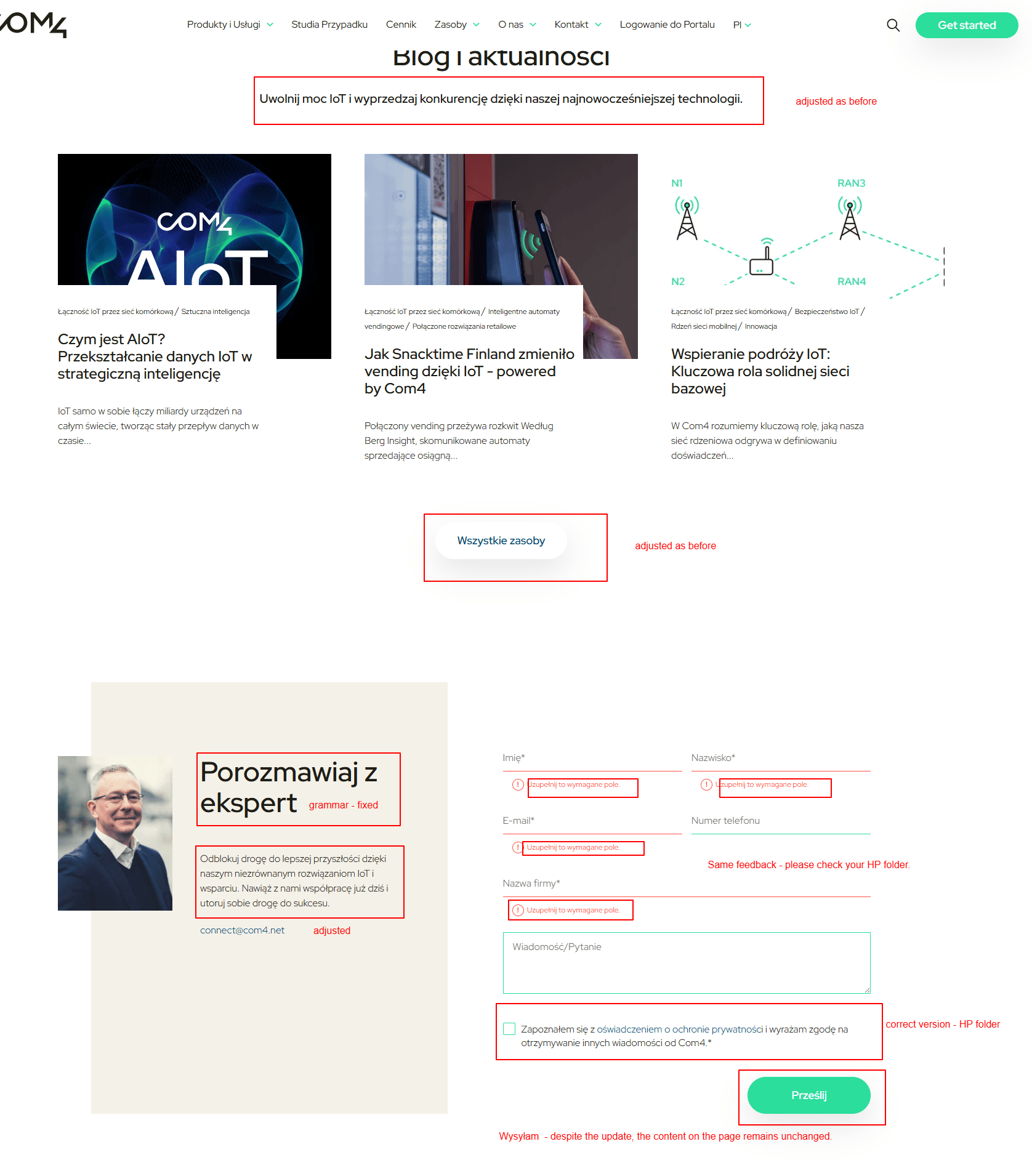
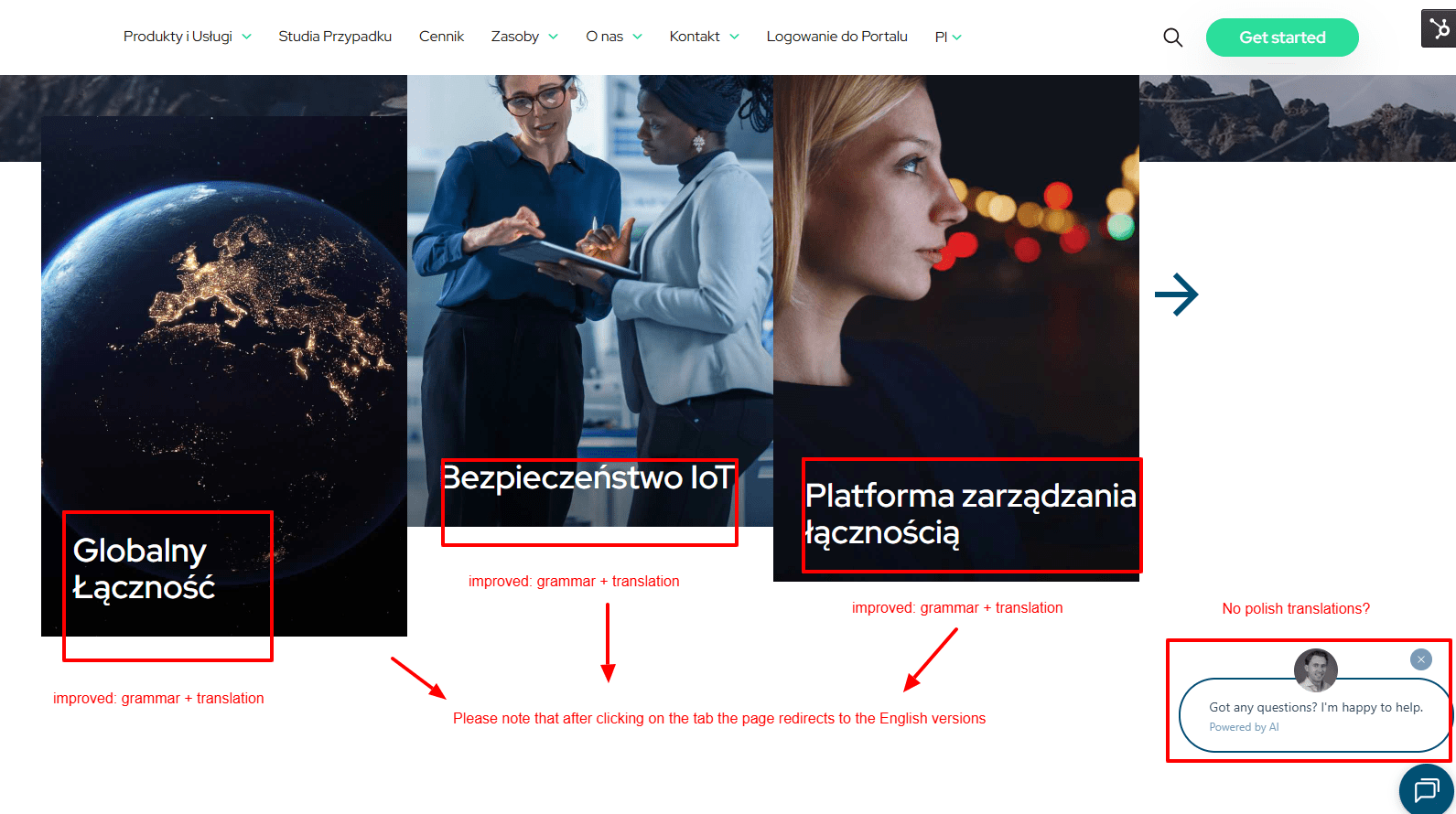
Once the localization phase was complete, I prepared a detailed report for the Com4 team with annotated screenshots and notes explaining the reasoning behind each language decision. Not just to show what was changed, but why those changes mattered for UX, clarity, and brand perception.
Each of the 23 pages was reviewed, rewritten, and fully adapted to the Polish user context.
The report also included recommendations for future optimization from unifying CTAs and technical terms to doing localized keyword research and improving page speed.
I also highlighted one key insight from experience: Polish users expect Polish-language support. It’s not just a nice touch - it’s a trust signal that directly impacts conversion.
Projects like this always remind me that localization isn’t a translation layer - it’s a communication mindset. It’s how we talk to users, build credibility, and remove friction that appears when language feels “foreign.”
The Com4 team approached it with complete professionalism - open, collaborative, and focused on getting the details right. For me, it was the perfect blend of linguistic detective work, UX clarity, and smart localization that truly changes how a brand sounds - and feels - to its audience.
Expanding into Poland? Let’s make your website speak the language of your customers - naturally, clearly, and with the right tone.
